

Warehouses and industrial facilities are fast-moving environments where forklifts, pallet trucks and delivery vehicles are constantly in motion. Without the right protection in place, a simple driver error can lead to serious damage to buildings, racking systems or machinery — and potentially serious injury to workers.
Businesses operating warehouses must also follow HSE guidance on safe warehousing and storage, which outlines how employers should manage vehicle routes, storage systems and pedestrian safety within industrial environments.
According to the Health and Safety Executive guidance on workplace transport safety
vehicle movements remain one of the leading causes of serious accidents in UK workplaces.
Because of this, warehouses increasingly install physical impact protection systems such as safety bollards and crash barriers to control vehicle movement and protect critical infrastructure.
If you are planning warehouse safety improvements, it is important to understand how these two systems differ and when each should be used.
What Are Warehouse Safety Bollards?
Warehouse safety bollards are heavy-duty steel posts installed into the ground or mounted onto a surface to prevent vehicles from striking vulnerable areas.
They are commonly installed to protect:
• roller shutter doors
• warehouse entrances
• electrical cabinets
• structural columns
• pedestrian walkways
• expensive machinery
You can view examples of heavy-duty warehouse bollards here.
Because bollards provide targeted point protection, they are ideal for protecting specific assets that vehicles may accidentally strike during manoeuvring.
Many businesses also install bollards as part of their duty to comply with UK workplace health and safety legislation under the Health and Safety at Work Act which requires employers to minimise risks associated with workplace transport.
The Logistics UK warehousing and distribution industry continues to expand rapidly as online retail grows, making safe traffic management within warehouses more important than ever.
What Are Crash Barriers?
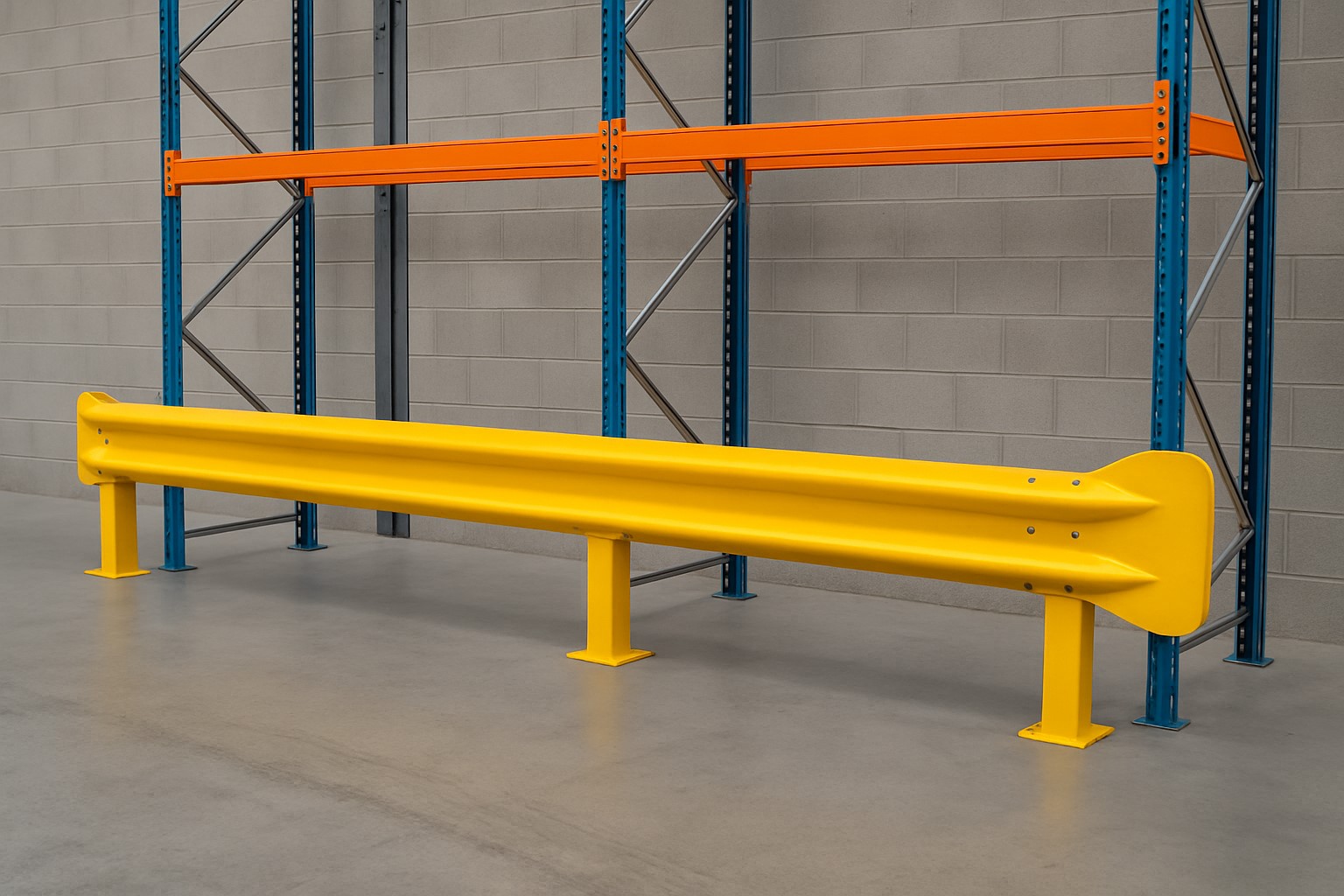
Crash barriers — often referred to as Armco barriers — are horizontal steel rails supported by vertical posts. They are designed to absorb impact and prevent vehicles from reaching protected areas.
These barriers are commonly installed along:
• warehouse walls
• storage racking systems
• production equipment
• loading bays
• vehicle routes
You can see typical industrial crash barrier systems here.
Unlike individual bollards, crash barriers provide continuous protection across larger areas, making them particularly useful where forklifts travel along defined traffic routes.
Many industrial barrier systems are manufactured in accordance with British Standards for vehicle restraint systems, which ensure barriers provide appropriate levels of impact resistance.
Why Vehicle Protection Matters in Warehouses
Workplace transport safety is a major concern in warehousing and logistics environments.
The Health and Safety Executive traffic management guidance
recommends separating vehicles and pedestrians wherever possible to reduce collision risks.
Poor warehouse layouts can result in:
• forklift collisions with infrastructure
• damage to roller shutter doors
• collapsed racking systems
• employee injuries
• costly operational downtime
According to UK transport and storage industry safety statistics published by the HSE
vehicle movements remain a major contributor to workplace injuries within the logistics sector.
Installing properly designed protective barriers helps reduce these risks while improving overall site organisation.
Industry bodies such as the British Safety Industry Federation warehouse safety guidance also emphasise the importance of physical barriers and clearly defined vehicle routes to reduce workplace accidents.
Bollards vs Crash Barriers – Key Differences
Although both systems are designed to prevent vehicle damage, they perform slightly different roles.
Safety Bollards Are Best For
• protecting roller shutter doors
• securing building entrances
• preventing vehicle access to restricted zones
• protecting columns or individual assets
Examples include removable, fold-down and fixed posts which you can see here.
Crash Barriers Are Best For
• protecting long sections of warehouse walls
• shielding racking systems
• guiding forklift traffic routes
• protecting conveyor lines or machinery
Typical Armco crash barrier installations can be viewed here.
In many warehouses, the most effective solution is a combination of both systems, providing targeted protection and continuous barrier protection where required.
Choosing the Right Protection for Your Warehouse
Selecting the correct barrier system depends on several factors including:
• vehicle type operating on site
• traffic flow patterns
• vulnerable infrastructure locations
• installation surface conditions
• budget requirements
For example:
A roller shutter door may only require two protective bollards to prevent forklift impact, while a warehouse wall or racking system may require a full Armco crash barrier installation.
Carefully planned barrier layouts can significantly reduce the likelihood of vehicle collisions while improving safety and operational efficiency.
Final Thoughts
Warehouse safety bollards and crash barriers both play a vital role in protecting buildings, equipment and employees from vehicle impacts.
Bollards provide strong point protection for vulnerable assets, while crash barriers deliver continuous protection across larger areas exposed to vehicle traffic.
When used together as part of a well-planned warehouse safety strategy, they help businesses reduce accident risks, protect infrastructure and create a safer working environment for employees.